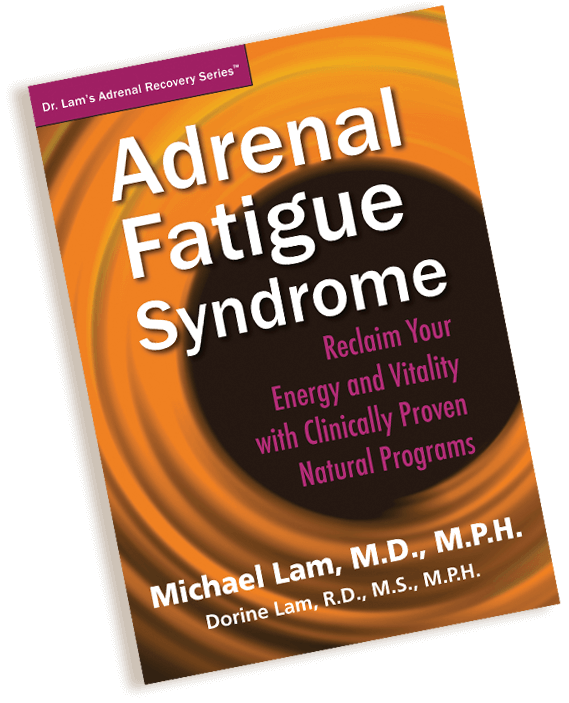
Dr. Lam Author of
|
|
|
|
Allergy Michael Lam, MD, MPH www.DrLam.com
Allergy comes in a variety of forms ranging from the seasonal rhinitis such
as hay fever, stuffy nose, itchy and watery eyes, to important illnesses
like asthma, eczema, and hives. When the body is not used to and does not
welcome certain allergens, an allergic reaction is triggered and immunoglobulins
are released. These trigger an inflammatory response and sets up a cascade
of cell mediated reactions where the tissues become swollen with cellular
fluids build-up which then causes difficulty in breathing as well as swelling
in the affected area. Controlling of the inflammatory response is therefore
critical in normalization of allergic reaction whether it is air borne or
food related. The best way to relieve allergies is to prevent it, and the
best way to prevention is to eliminate foods in the diet that have the trigger
potential.
In the case of air borne allergens, the use of a air filter or other systems
to clean the air is advisable. Homes that have carpet flooring should be
changed to wood flooring.
Conventional medicine uses a host of synthetically derived and laboratory
made antihistamines to combat the release of histamines in order to reduce
the swelling and control symptoms. While this works the majority of the
cases if properly dosed, there is a significant number of side effects including
sleepiness and dizziness just to name a few. The following natural compounds
are excellent when it comes to relieving symptoms of allergy without any
side effects:
Quercetin
Quercetin can be considered the king of flavinoids. It is an excellent natural
anti-histamine. It also interferes with the pain promoting inflammatory
substances that are generated in the body in many auto-immune diseases including
rheumatoid arthritis and colitis. In addition to its antihistaminic effect,
studies have shown that it is also able to fight off an enzyme that neutralizes
cortisol, a natural anti-inflammatory chemical produced by the body. You
can get quercetin by drinking more unfermented green tea as well as red
wine. Apples, onions, tomatoes, green peppers, as well as broccoli are all
excellent sources of quercetin. However, as a large amount of it is required
to produce a positive effect, it is better to take a quercetin supplement.
The recommended dose is 600-6000mg in divided dose on a empty stomach.
Bromelain
Bromelain is an enzyme that is found in pineapple stems. Its primary activity
is to reduce inflammation and promote healing, especially in the muscle
and joints. As such, it is quite popular and is used widely in sports medicine
and trauma management. Bromelain’s anti-inflammatory property also plays
a significant role in the management of asthma, arthritis, colitis, and
other allergy responses. It should be noted that only high potency and high
quality supplements should be used In a therapeutic setting. Bromelain’s
potency is rated in terms of GDU units. The higher the GDU number, the more
potent it is. The recommended GTU unit should be at least 2500-3500. A dosage
of 600-2000mg is required for therapeutic effects. It should be taken on
a empty stomach with quercetin.
Vitamin C
Vitamin
C is a fundamental nutrient to good health. In particular, in asthma and
allergy setting, vitamin C has been proven effective combat allergies. A
dosage of 1000mg or more has some anti-histaminic effect, but the Vitamin
C does much more than that. Because vitamin C is water soluble, its action
is slower. A few weeks may be needed to achieve the adequate blood level.
In the case of asthma, many studies have shown that a daily vitamin C dosage
of 1000-2000mg can improve lung function and reduce the chances of asthmatic
attacks. In one study, a daily dose of 2 grams has been shown to reduce
asthma. Always try to include bioflavinoids when taking vitamin C, especially
in high doses. While there is a fair amount of vitamin C in fresh fruits,
there is a trade off in the sense that fruits high in vitamin C are high
in sugar and carbohydrates. If you choose to take vitamin C from natural
sources, dark green vegetables, red peppers, lemon juice, and totals are
smart selections. Cabbage, broccoli, strawberry, and citrus fruits are also
acceptable. Try to stay away from the melon family as melons are high in
sugar. Taking large amounts of vitamin C is remarkably safe. It is also
good to add some digestive enzymes which contribute to a better blood concentration
of vitamin C. The body uses vitamin C quickly after it has been injected.
It is good to take Vitamin C in divided doses, with no more that 2 grams
at any one point in time. Taking vitamin C together with bioflavonoids such
as quercitin, will potentiate the effects of vitamin C. In the case of allergic
response, always take Vitamin C in conjunction with some quercetin. Therapeutic
dosage is anywhere from 2-10gram of a complex cocktail consisting of vitamin
C, lysine, proline, bioflavonoids, grape seed extracts, and ascorbyl palmitate.
Pantethine
Pantethine is a derivative of pantothenic acid(Vitamin B5). When inside
the body, it is converted into Coenzyme A. coenzyme A is one of the few
substances that the body needs in the metabolism of protein, fat, and carbohydrates.
It is also the basis for the production for adrenal steroidal hormones which
have an anti-inflammatory effect. The use of Pantethine is therefore an
excellent choice when it comes to conditions such as allergies, asthma,
lupus, or psoriasis. Because it helps in the production of cortisol, the
body’s natural steroid, anybody who is taking prednisone or other steroidal
medicine stands to benefit. While it may not be able to replace drugs, there
is often a synergistic effect and the amount of drugs required may be reduced.
Pantethine also allows the adrenal glands to generate more omega-3 fatty
acid in the body. Omega-3 fatty acid is well known to have anti-inflammatory
properties. Reducing inflammation and inflammatory response is a key recovery
pathway in allergic therapeutic setting.
Essential fatty acid
Essential fatty acids are indispensable as they provide building blocks
for the body’s numerous eicosanoids. Many of these hormone-like compounds
are also called prostaglandins and have tremendous anti-inflammatory power.
Omega-3 fatty acid in particular is very strong in generating eicosanoids.
Most of us living in the modern world already have a high intake of omega-6
fatty acid from a variety of processed foods. Accordingly, we are low in
Omega-3. Inflammatory conditions such as arthritis, plaques, blood clots,
and immune system weakness are related to a lack of omega-3 fatty acid intake.
Essential fatty acids found in omega 3 fats and oil are alpha-linolenic
acid, eicosapentaenoic acid (EPA), docosahexaenoic acid (DHA). The anti-inflammatory
properties of omega-3 fatty acid have been well established. In high doses
of 3-5 grams or more a day of the active ingredient EPA and DHA, it has
been shown that there is a tremendous beneficial effect in inflammatory
bile diseases such as colitis and Crohn’s disease, auto immune diseases
such as rheumatoid arthritis, and a variety of skin disorders such as eczema.
Because there is a strong inflammatory component in asthma, the use of fish
oil in a pulmonary disorder such as asthmatic conditions is an excellent
choice.
As a natural compound, the anti-inflammatory properties of omega-3 fatty
acid are excellent. However, doses of up to 10-20 grams may be necessary.
It also takes anywhere from 3-6 months for the omega-3 fatty acid blood
level to be built up. One note of caution: Most capsules contain approximately
300mg of DHA and EPA combined. In contrast, high quality fish oil capsules
have up to 600mg of combined DHA and EPA. If one were to take in 5 grams
of DHA and EPA, t hen
up to 18 capsules of fish oil, depending on potency, may be required. Taking
this high number of capsules or soft gel is generally not recommended. The
reason is because, during the capsulation and gel process, high heat is
employed, which can destroy part of the fish oil properties and lead to
a change in the molecular structure of the fish oil. If a person already
has an allergic response, the gelatin used in the gel cap as well as the
heat changed fish oil may serve as an irritant. When high dose is contemplated,
use only the liquid bottled form. Insist on the purest product which is
molecularly distilled and contains less than 5ppb of mercury. When not in
use, such fish oil liquid should be stored in an ambered glass bottle and
placed in the freezer and this is one test of purity. Pure fish oil of high
quality will not freeze when put in the freezer. The freezing cold will
stop the oxidative process from reducing the effectiveness of the oil. Fish
oil should also be dispensed in silverware, and not onto plastic or styrofoam
utensils. Because pure fish oil may melt Styrofoam and plastic, fish oil
it should be stored in a glass container only.
DHEA and Pregnenolone
DHEA and pregnenolone are both hormones produced by the body’s adrenal glands,
and they act as pro hormones in the synthesis of cortisol, the body’s natural
steroid. Taking DHEA and pregnenolone will raise the body’s internal cortisol
level and will give it you a sense of well being as they will also lead
to the production other hormones such as progesterone, estrogen, and testosterone
by the human body. Recommended daily dosage of DHEA is 30-100mg and pregnenolone
is 30-100mg.
| Message from
Dr. Lam
I hope you have enjoyed reading this
article. If you have areas you don’t understand, or if you have a specific health concern, feel free to write
to me by clicking here.
|
About The Author
Michael Lam, M.D., M.P.H., A.B.A.A.M. is a specialist in Preventive and Anti-Aging Medicine. He received his Bachelor of Science degree from Oregon State University, and his Doctor of Medicine degree from Loma Linda University School of Medicine, California. He also holds a Masters of Public Health degree and is Board Certification in Anti-aging Medicine by the American Board of Anti-Aging Medicine. He has authored numerous articles and the following books: The Five Proven Secrets to Longevity, How to Stay Young and Live Longer, Estrogen Dominance - Hormonal Imbalance of the 21st Century, and Beating Cancer with Natural Medicine.
For More Information
For the latest anti-aging related health issues, visit Dr. Lam
at www.DrLam.com. Feel free to email
Dr. Lam by clicking here if you have any questions.
Reprint Information
This article may, in its unabridged, unaltered form and in its entirety only,
be reprinted and republished without permission provided that it is for personal
and non commercial education use only and further provided that credit be given
to the author, with copyright notice and www.DrLam.com
clearly displayed as source. Written permission from Dr. Lam is required
for all other use.
© 1999-2009 Michael
Lam, M.D. All Rights Reserved.
 |
 |
Follow Me On Twitter!
|
|
|
|
|