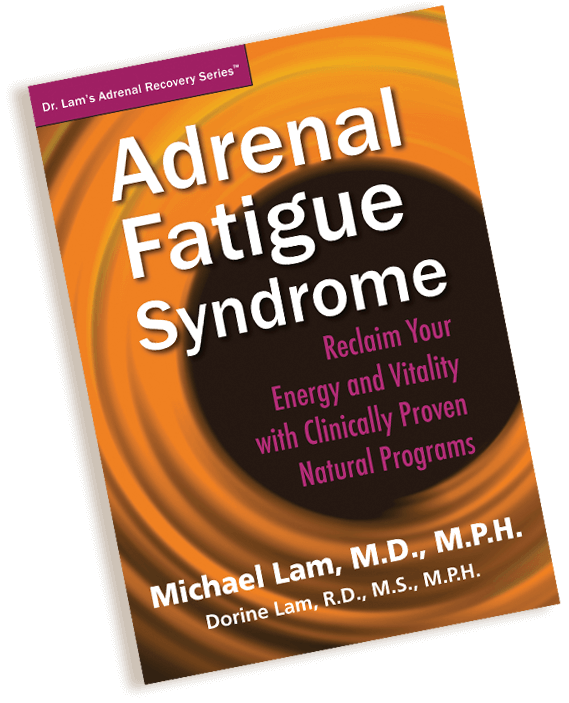
Dr. Lam Author of
|
|
|
|
Ginseng
Michael Lam, MD, MPH www.DrLam.com
| Before You Begin
Information presented here is for general
educational purposes only. Each one of us is biochemically and metabolically
different. If you have a specific health concern and wish my personalized
nutritional recommendation, write to me by clicking
here. |
There
are two main kinds of ginseng: Chinese or
Korean ( Panax ginseng) and Siberian ( Eleutherococcus senticosus).
For over 5000 years, this agent has been used to restore vitality, increase
the feeling of energy, improve mental and physical performance, increase
immunity, and reduce anxiety. Ginseng has the ability to serve as an adaptogen.
Kings and emperors of the past have placed great emphasis on ginseng to
fortify their health.
It appears to accomplish these goals by fine
tuning the adrenal gland and reestablishing a proper cortisol level.
Cortisol is a hormone secreted by the adrenal gland. More is secreted
in times of stress or after a meal high in sugar. It is one hormone that
increases with age rather than decreasing (as in growth hormone,
DHEA, melatonin, estrogen, and testosterone). Excessive cortisol in your
body is a leading pro-aging factor. For this reason, cortisol
is also called the aging hormone. The exact mechanism of action
of ginseng is still unknown, and will not be fully investigated for many
years to come.
There are many types and grades of ginseng and ginseng extracts. Chinese ginseng tends to be the more potent form. Consider
using Chinese ginseng if you have been under a great deal of stress, if
you are recovering from an illness, or have been on corticosteroid drugs
(such as prednisone) for a long time. Siberian ginseng works well if your
stress is mild and your adrenal function is less affected.
The marketplace is full of many types and grades of ginseng and ginseng
extracts. The quality is highly dependent on the source, age, parts of the
root used, and the method of preparation. Due to the lack of FDA regulation
and standardization, be weary of unsubstantiated claims and unscrupulous
marketing schemes.
Ginseng
can be eaten raw. The Koreans do it by cutting the root into small slices
and dipping them into honey to damping the bitterness before eating as a
appetizer.
If you are shopping for ginseng extracts, choose only products that have
been standardized for ginsenoside content.
Generally, 100 mg of extract containing 5% of ginsenosides three
times a day in the form of an oral tablet is sufficient. For milder support,
use fluid extracts of Siberian ginseng at a dosage of 1 to 2 tsp one to
three times a day, or the dry powdered extract at the dosage one to three
times a day.
The response varies widely, and there is no guarantee
of results. Start at lower doses and gradually increase the daily
amount. If you take too much, side effects such as anxiety, irritability,
nervousness, insomnia, hypertension, menstrual changes, and breast pain
may arise. Should these problems develop, reduce your intake or discontinue
using ginseng completely.
For the less adventurous, consider vitamin
B12 ( 500 mcg to 1500 mcg) as an alternative or to be used concurrently
to enhance the results of ginseng.
| Message from
Dr. Lam
I hope you have enjoyed reading this
article. If you have areas you don’t understand, or if you have a specific health concern, feel free to write
to me by clicking here.
|
About The Author
Michael Lam, M.D., M.P.H., A.B.A.A.M. is a specialist in Preventive and Anti-Aging Medicine. He received his Bachelor of Science degree from Oregon State University, and his Doctor of Medicine degree from Loma Linda University School of Medicine, California. He also holds a Masters of Public Health degree and is Board Certification in Anti-aging Medicine by the American Board of Anti-Aging Medicine. He has authored numerous articles and the following books: The Five Proven Secrets to Longevity, How to Stay Young and Live Longer, Estrogen Dominance - Hormonal Imbalance of the 21st Century, and Beating Cancer with Natural Medicine.
For More Information
For the latest anti-aging related health issues, visit Dr. Lam
at www.DrLam.com. Feel free to email
Dr. Lam by clicking here if you have any questions.
Reprint Information
This article may, in its unabridged, unaltered form and in its entirety only,
be reprinted and republished without permission provided that it is for personal
and non commercial education use only and further provided that credit be given
to the author, with copyright notice and www.DrLam.com
clearly displayed as source. Written permission from Dr. Lam is required
for all other use.
© 1999-2009 Michael
Lam, M.D. All Rights Reserved.
 |
 |
Follow Me On Twitter!
|
|
|
|
|